Forest Heights Knoxville Commute: A Closer Look
May 21, 2026
May 21, 2026
If you want a Knoxville address that feels tucked away but still keeps your daily drive manageable, Forest Heights deserves a closer look. Many buyers focus on the usual west Knoxville names, yet this neighborhood quietly offers something hard to find: a leafy, established setting with practical access to downtown, UT, and major medical centers. If you are weighing commute time against neighborhood character, this is where the conversation gets interesting. Let’s dive in.
Forest Heights is a Knoxville neighborhood in Knox County, and its identity is closely tied to the Forest Hills Boulevard Historic District. According to the National Park Service, the area sits on steeply rolling, heavily treed land, and the original subdivision pattern remains intact. That gives the neighborhood a sense of continuity that many close-in areas have lost over time.
For buyers who want more than a simple point A to point B location, that matters. You are not just choosing a convenient address. You are choosing a neighborhood that feels established, shaded, and distinctly residential while still sitting within reach of Knoxville’s major destinations.
One reason Forest Heights earns the “commuter secret” label is its placement. The City of Knoxville’s directions to Forest Heights Pocket Park route drivers through I-40, Alcoa Highway, Papermill Drive, Kingston Pike, Westwood Road, and Sutherland Avenue. In real life, that means you have multiple ways to approach the neighborhood instead of relying on a single entry point.
That kind of flexibility can make a real difference in your routine. If you commute at peak hours, alternate routes can help you adapt when traffic builds on one corridor. It also reinforces why Forest Heights often feels more practical than buyers expect when they first look at the map.
Forest Heights is best described as close-in and driver-friendly. Third-party Walk Score data for Sutherland Avenue and Forest Heights Road estimates about a 9-minute drive to downtown Knoxville. That same source rates the area as Very Walkable at 75 and Very Bikeable at 71, but transit remains more limited with a score of 28, or Some Transit.
In other words, this is not a transit-first neighborhood. It is a neighborhood where driving remains the easiest option for many households, with walking and biking adding flexibility for some errands and local trips.
For many professionals, the real question is not whether Forest Heights is attractive. It is whether it works on a Tuesday morning.
Downtown Knoxville is one of the biggest reasons the answer may be yes. The City of Knoxville places Market Square at the center of downtown, and UT Knoxville says its campus stands beside the Tennessee River and amid downtown Knoxville. For practical purposes, downtown and UT sit in the same short-commute orbit for nearby neighborhoods like Forest Heights.
That can be especially appealing if your work, classes, events, or appointments regularly pull you into the city center. You can stay close to the energy of downtown without feeling like you live in the middle of it.
Forest Heights also makes sense for buyers who want reach to major healthcare employers and facilities. UT Medical Center is located at 1924 Alcoa Highway and serves as the region’s academic medical center and Level I Trauma Center. Parkwest Medical Center, at 9352 Park West Blvd, is another major medical destination in West Knoxville.
If your schedule centers around hospital shifts, appointments, or regional healthcare access, location matters in a very practical way. Forest Heights offers a west-central Knoxville position that keeps these destinations reasonably accessible.
Oak Ridge National Laboratory is another major regional employer, with more than 7,000 scientists, engineers, technicians, and support staff according to ORNL. It is located at 1 Bethel Valley Road in Oak Ridge. While no published travel-time guarantee supports a specific commute claim, a west-side Knoxville location may appeal to some buyers looking for a reverse-commute base.
That does not make Forest Heights the right answer for every ORNL employee. Still, if you want a neighborhood that balances Knoxville access with westward regional reach, it is worth considering.
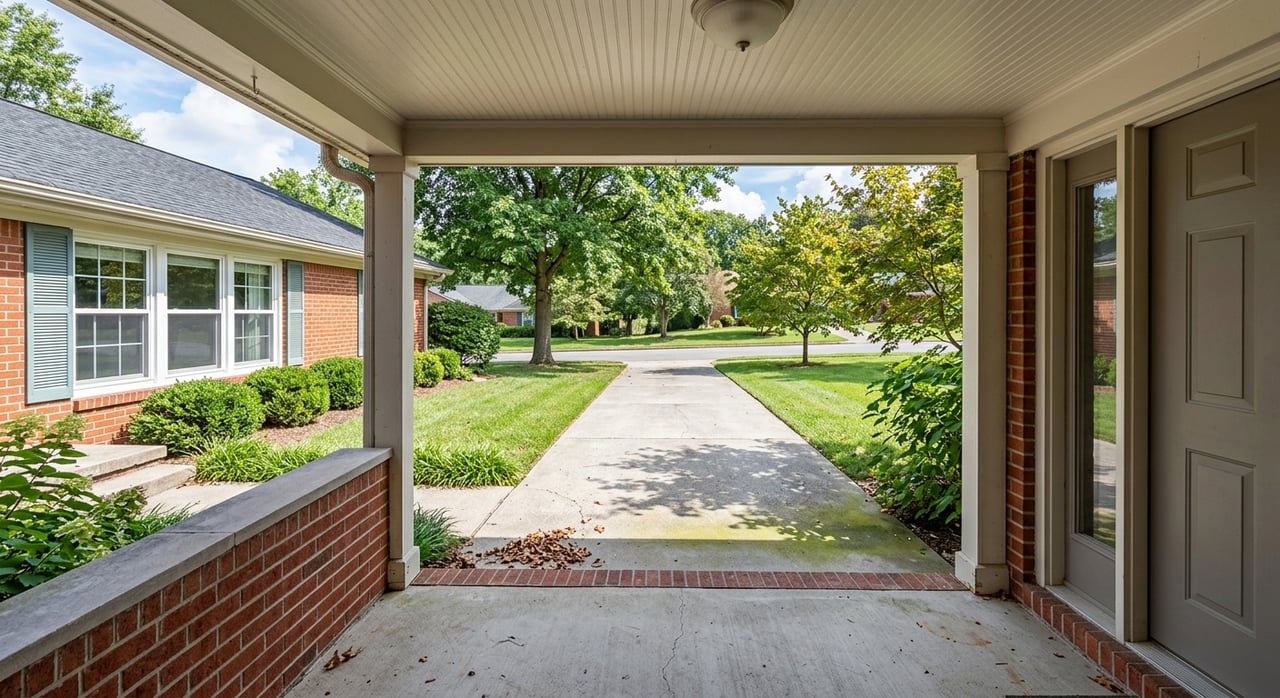
Commute time is only part of the story. A neighborhood can be well located and still feel too exposed, too busy, or too stripped of character. Forest Heights stands out because it offers access without losing its residential feel.
The City of Knoxville’s Forest Heights Pocket Park sits at 411 Highland Hills Road beside the Bearden Village Greenway. That pairing supports the idea that you can live near major roads and still have outdoor space woven into your day-to-day routine. For many buyers, that adds a quality-of-life benefit that does not show up on a map alone.
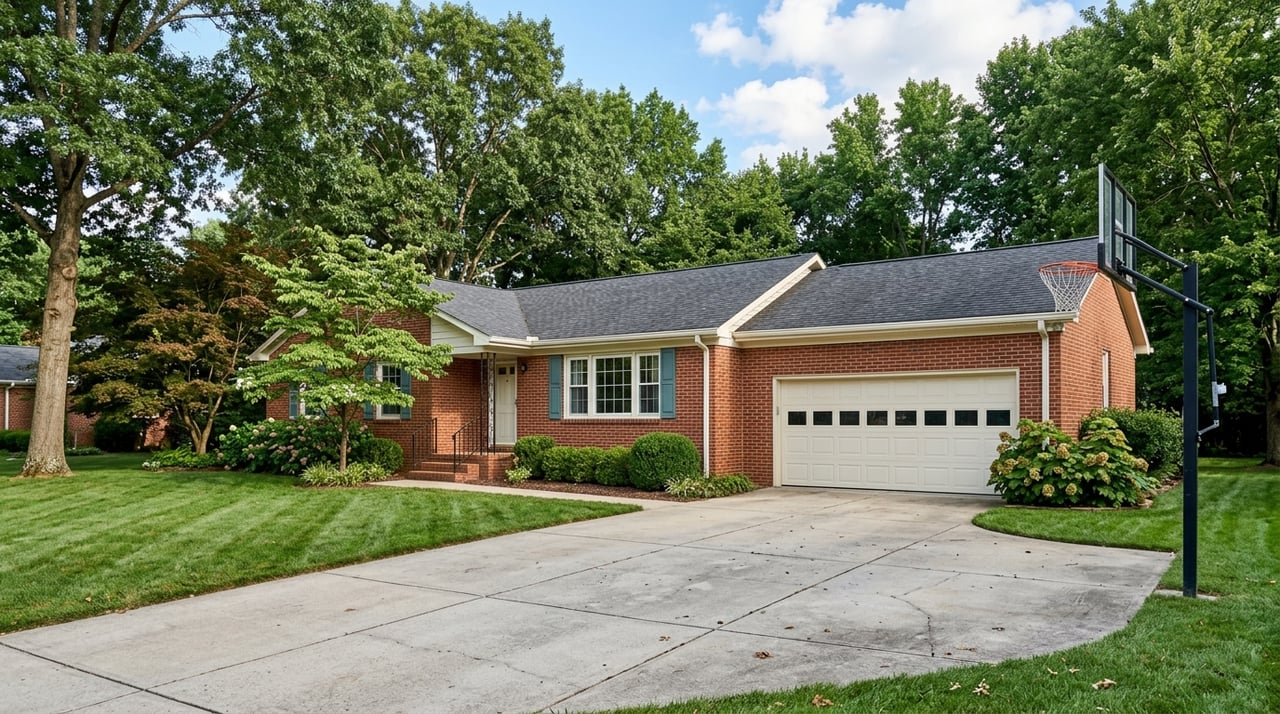
Forest Heights has a green, established setting that helps explain its appeal. The historic district remains intact, and the area’s rolling topography and mature tree cover shape how the neighborhood looks and feels. According to the city tree report cited in the research, higher-canopy areas can be 5 to 10 degrees cooler in mornings and evenings.
The Bearden Village, Westwood, and Forest Heights cluster had 36% tree canopy in 2018, compared with 38% citywide. That places the neighborhood close to the broader city pattern while still supporting its reputation as a leafy area. For buyers who care about shade, visual softness, and a more settled streetscape, that can be a meaningful advantage.
Forest Heights does not read as a place that was built and forgotten. The City of Knoxville says the Forest Heights Neighborhood Association adopted the pocket park, and the association has received Community Wildlife Habitat certification. That speaks to a level of resident involvement that many buyers value.
When a neighborhood shows signs of stewardship, it often feels more stable and more connected. You can sense that people care about the shared environment, not just individual properties. For someone relocating to Knoxville, that can make Forest Heights feel easier to trust.
The most honest answer is this: it may be one of Knoxville’s best-kept commuter secrets for the right buyer. If you want a close-in neighborhood with historic character, mature trees, multiple road connections, and practical access to downtown, UT, and major medical centers, Forest Heights makes a strong case.
At the same time, it helps to be clear-eyed. This is not a transit-centered choice, and the area still leans heavily on car access. KAT Route 17 serves the corridor with 30-minute weekday and Sunday frequency as of March 9, 2026, but it does not operate on Saturdays, when riders are directed to Route 11. That makes Forest Heights more flexible than isolated, but still more driver-oriented than transit-oriented.
For many Knoxville buyers, that tradeoff works well. You get an established neighborhood that feels shaded, residential, and central without giving up the road access that makes a busy schedule manageable.
If you are exploring Forest Heights because you want a neighborhood with real character and a practical commute, local context matters. Angie Riedl brings deep knowledge of west and central Knoxville neighborhoods and offers a personalized, high-touch approach for buyers and sellers who want informed guidance.
Stay up to date on the latest real estate trends.
June 25, 2026
June 18, 2026
June 11, 2026
June 4, 2026
May 28, 2026
May 21, 2026
May 14, 2026
May 7, 2026
April 23, 2026